
)
How to use mobile video ads in games to maximize revenue
)
Mobile video ads have always performed well in gaming apps and have long been one of the most effective monetization methods. A video ad integrates naturally into gameplay and creates value at key moments in the user experience.
The challenge for mobile games is to maximize ad revenue without disrupting gameplay or increasing churn. Understanding which formats to use, when to deploy them, how to optimize in real-time, and how to measure real impact on retention and revenue requires strategy and experimentation.
This guide looks at everything from ad formats and monetization models to optimization and performance, so you can build or refine a video ad strategy that drives revenue while protecting player experience.
What are video ads in mobile gaming?
Video ads in mobile games are ads shown during sessions that help generate revenue. They usually appear at natural points like between levels, during rewards, or breaks, or at specific time intervals. Unlike ads that attract new players, these video ads aim to earn money from current users without hurting their desire to keep playing.
Video ads are just one way a mobile game can monetize, and have historically been most popular in high turnover genres like casuals and hyper casuals. In-app purchases (IAPs) and subscriptions are the other key approaches to bringing in money from players who pay, but video ads are the most effective way to earn money from the many players who don’t spend directly. Today, with retention becoming more central across the majority of games subverticals, hybrid monetization (a combination of methods) is common.
Mobile video ad formats for gaming apps
Each format serves a different purpose and will appeal to different audiences or campaign goals. There are five core video ad formats, each with a distinct purpose, audience fit, and risk if you get the placement wrong.
Rewarded video ads
Rewarded video ads are generally the best-performing format in mobile gaming. The mechanic is simple: a user opts in to watch a 15–30 second video in exchange for in-game currency, extra lives, power-ups, or other rewards. Because the user initiates the interaction, completion rates are strong, around 95%, and user sentiment tends to be positive.
The strongest rewarded integrations are contextually smart. Rather than firing on a fixed timer, they trigger at natural friction points: a player runs out of lives, stalls on a level, or hits a currency gate. This makes rewarded ads the safest format for ad-based monetization, if increasing retention while scaling revenue is the goal.
)
Tip: Tier your rewards. E.g. a basic reward (one extra life) for shorter view times and users earlier in their player journey, and premium rewards (such as rare items or 2x coins for 30 minutes) for users already proven to be sticky. Testing view lengths vs. rewards and how that impacts session lengths and LTV across user segments will help surface the data needed to continue refining placements.
Interstitial video ads
Interstitial ads are full-screen video units displayed at natural transition points, such as between levels, at session start, or at the end of a run. The critical factor is placement logic. Showing an interstitial ad, especially a non-skippable one, at the wrong moment is one of the top drivers of churn. This is where frequency capping becomes crucial.
Use cohort data (from your mobile measurement partner (MMP), like Adjust, to identify session depth thresholds before introducing interstitials to new users. The data will show you at what depth the format can be introduced without negatively affecting retention.
)
Playable ads
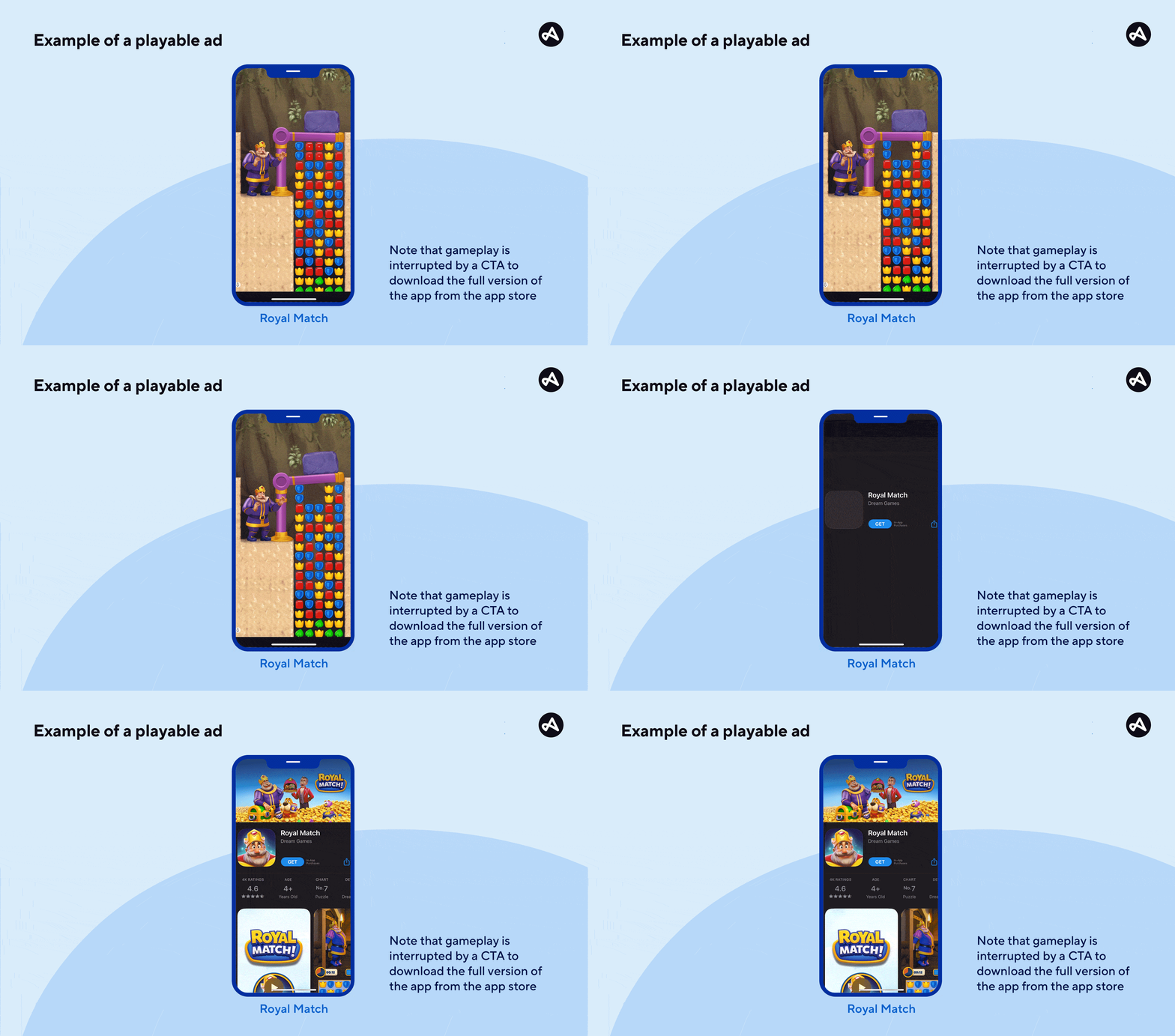
Playable ads are interactive previews, mini-versions of a game that users can try before downloading. While playable formats exist across app categories, they are most widely used and most effective in mobile gaming, where interactivity is core to the product experience.
These are most common as ads in non-gaming environments, such as on social media, to encourage the initial install. They are, however, also common within games themselves, particularly if a studio is cross-promoting another one of their own titles, as this is an effective way to keep a player within one portfolio. This could be a smart option if data shows that a player is coming up to the end of their lifecycle or have already hit LTV projections and was previously a very common tactic in hyper casuals.
The emerging development in this space is playable augmented reality (AR) formats. As AR capabilities mature on iOS and Android, playable formats are blending game mechanics with real-world interactions.
Hybrid video and playable formats
A newer ad format, as the name suggests, this style combines video with interactive elements. These ads begin with a video sequence and transition into an interactive experience before the call to action (CTA), allowing users to engage with the content. Hybrid formats are particularly effective in rewarded environments.
The investment required is higher than for standard video. Production, testing, and creative iteration are more demanding. The trade-off is stronger performance as interactive formats have shown to drive higher conversion rates and retention compared to traditional video ads.
Banner ads
Banner ads are still part of the mix, but their function has narrowed as banner blindness is well documented. Banners work best as supporting formats during low-friction moments (menus, map screens, loading sequences).
One exception worth noting is the growing use of artificial intelligence (AI)-powered personalization. Dynamic banner optimization is improving relevance, particularly for studios with strong first-party data.
)
A practical framework for building your mobile video ad strategy
Now, let's focus on a practical framework for your in-game video ad strategy.
Choose your monetization architecture first
Before choosing ad formats and optimizing placement and timing, you must have a clear monetization structure that defines how video ads fit into your overall revenue model. Hybrid monetization models, a mix of rewarded video, in-app purchases, and subscriptions, have become the go-to for many developers. Your model will guide which formats work best, how aggressively to monetize during each session, and where players might drop off.
Use an ad mediation platform
Mediation platforms like AppLovin MAX and Google AdMob bring together demand from many networks through in-app bidding, which helps maximize your effective cost per mille (eCPM). In-app bidding has become the standard, replacing older waterfall methods. Mediation also means you often only need to integrate one SDK, which reduces technical work and helps keep your app running smoothly.
Get your placement and timing right
Timing is crucial. Three great moments to place ads are: before gameplay, where a rewarded ad gives players an instant boost and increases engagement; during natural breaks like between levels, after a failed attempt, or at the end of a session; and at tough spots when players run out of lives, get stuck, or hit a currency gate.
Avoid placing ads that interrupt gameplay. Use session-depth data from your MMP to find when players are most open to ads—usually after they've invested time but before they face harder challenges. This ideal window is small, and data helps you find it.
AI tools can now help identify different player types (those who watch ads, those likely to buy, and those who might subscribe) and quickly offer the right experience.
Skippable vs. non-skippable: apply context
For rewarded videos, non-skippable ads work well since users choose to watch them. For interstitial ads, letting users skip after 5 to 7 seconds helps reduce churn. Test both options and track retention and revenue on day 1, day 7, and day 30. Remember, retention should almost always be evaluated alongside revenue.
Creative quality and variation
The volume and variety of video ads shown inside games has increased significantly due to AI-driven production on the advertiser side.
Players see new ad creatives more often now, so keeping ads relevant and fresh is key to maintaining engagement and completion rates.
Measure what matters
Track these key metrics to measure your video ad performance:
- eCPM shows how much revenue you earn per 1,000 ad impressions. Monitor eCPM by ad format, region, and platform to find the best revenue combinations.
- Video completion rate is the percentage of ads players watch to completion. It indicates how engaging and relevant your ads are.
- Average revenue per daily active user (ARPDAU) measures the total revenue each daily user generates, including ads and in-app purchases.
- Retention rates on day 1, 7, and 30 show how many players return to your game over time, helping you identify whether ad exposure is negatively impacting player experience.
- Lifetime value (LTV) measures the total revenue each player generates over their lifetime in your game, helping you understand how monetization decisions impact long-term retention and revenue.
To make sense of these metrics, you need a reliable way to track and link user behavior throughout your game. That’s where an MMP like Adjust comes in. Adjust gathers and organizes in-app event data, including ad impressions, revenue, and player actions (events), into one clear view. This lets you understand how different user groups interact with ads, how monetization affects retention, and where your revenue comes from. With this insight, you can improve ad placement, frequency, and your overall monetization strategy based on actual player behavior.
Balancing revenue and player experience with video ads
Even with the right formats and monetization model, long-term success depends on how well you balance revenue generation with player experience from the first ad view through to the long term journey. Placement timing, frequency control, and reward design all determine whether ads feel valuable or disruptive to players. The goal is to create a system where ads feel like part of the gameplay or feel like a valuable tradeoff of time.
For more information on how Adjust can support your in-game video ad strategy, and how we can grow your app business in general, sign up for free or request a demo today.
Be the first to know. Subscribe for monthly app insights.
Keep reading
